

From hands-on workshops to interactive Q&A sessions, the 53rd Annual Safety + Health Conference has something for everyone.
Be Part of the Region’s Premier Safety & Health Event!
Sessions – Priced Individually
PC01 – Compliance Rescue Refresher™
$375 member | $475 nonmember
Brad Warr/Chris Carlsen – ROCO Rescue
8 am – 5 pm, Intermediate
20 students max
A real emergency demands rescue proficiency. To maintain proficiency, refresher training and regular practice drills are vital. OSHA 1910.146 requires that rescue team members practice making permit space rescues at least once every 12 months from actual or representative confined spaces. NFPA 1670 states that teams must undergo an annual performance evaluation, and NFPA 1006 says individuals shall demonstrate competency on an annual basis. Roco’s Compliance Rescue Refresher™ course includes hands-on practice as well as problem-solving confined space and elevated scenarios to keep your team updated and prepared for response.
PC02 – Strategies to Improve Motor Carrier Safety and CSA Scores
$220 member | $255 nonmember
Josh Anderson/ Michael Hinrichs – North Dakota Highway Patrol
8 am – 12 pm, Intermediate/Advanced
Members of the North Dakota Highway Patrol Motor Carrier Operations division will take an in-depth look at FMCSA’s Compliance, Safety and Accountability (CSA) program. Troopers will begin by reviewing how CSA scores are calculated and when alerts appear on a motor carrier profile. After creating a baseline understanding of scores, the training will then break down the use of the Safety Management Cycle to assist carriers in identifying strategies to improve and maintain their safety program. The session will end by reviewing and demonstrating quality Pre/Post trip inspections to positively impact the Vehicle Maintenance.
PC03 – CPR/AED/First Aid
$95 member | $100 nonmember
Stacey Fick – NDSC
8 am – 2 pm, Any Level
15 students max
Do you know how to respond if your colleague collapsed on the job site? This course teaches students to take action in a medical emergency and prepares them to respond to choking, breathing and cardiac emergencies. Participants will learn how to use an automated external defibrillator (AED) in conjunction with CPR. First Aid is taught using a combination of instructor-led lecture, “watch-then-practice” videos, and hands-on training. Topics such as bleeding, burns, poisoning and sudden illness are covered. Course content is applicable for industrial, office, and home settings. Upon completion, receive an Adult 2-year CPR/AED and 2-year First Aid certificate.
PC04 – Basics of HACCP Food Safety Refresher
$220 member | $255 nonmember
Dr. Travis Maddock – Dakota Global Consulting
8 am – 12 pm, Any Level
In this four-hour HACCP refresher course, participants will learn how to reduce the risk of food safety hazards and increase their food safety standards. Not only will this support compliance with regulatory requirements such as those from the FDA and the Global Food Safety Initiative (GFSI), it will also elevate consumer confidence in your products. A responsible food safety program helps reduce costs by decreasing the amount of lost product, as well as help organize your process to produce safe food.
PC05 – Mental Health First Aid
$175 member | $195 nonmember
Dennis Snodgrass – NDSC
8 am – 5 pm, Any Level
15 students max
Mental Health First Aid (MHFA) is skills-based training that teaches people how to identify, understand and respond to signs and symptoms of a mental health or substance use challenge. Similar to physical First Aid and CPR, MHFA helps you assist someone experiencing a mental health or substance use crisis until professional assistance is obtained or the crisis is resolved. Nearly 1 in 5 in the U.S. live with a mental illness, and on average, 130 people die by suicide every day. MHFA gives you the skills to respond with confidence; including to crises associated with trauma and emphasizes the importance of early intervention following a traumatic event.
PC06 – New Safety Professional 101
$175 member | $225 nonmember
Andrea Jensen/ Kacy Kirby – NDSC
8 am – 12 pm, Basic
Are you new to the safety profession or want to gain more knowledge of the role OSHA and Workforce Safety Insurance (WSI) play within your company. In this course you will learn how to navigate the OSHA.gov website to better understand the regulations and ensure compliance. After taking this course, students will also gain understanding of who WSI is and the true cost of workplace injuries. This course will also give you essential resources to delve deeper into the safety profession.
PC07 – OSHA 7105 Evacuation and Emergency Planning
$185 member/nonmember
Dale Robinson – Construction Education Foundation OSHA Training Institute
8 am – 12 pm, Any Level
This course covers OSHA requirements for emergency action and fire protection plans. Course topics include purpose and requirements of emergency action and fire prevention plans, elements of emergency evacuation plans, and features of design and maintenance of emergency exit routes. Students will participate in workshops pertaining to the development of emergency action plans. Upon course completion students will have the ability to list the elements of an emergency action plan and emergency evacuation floor plans, recognize violations of OSHA exit route requirements, determine whether their organization requires an emergency action plan, and develop and implement workplace emergency action and fire protection plans. Minimum student contact hours: 4 Prerequisites: None
PC08 – Professional Ethics for the Safety Leader
$245 member | $285 nonmember
Wyatt Bradbury – Avetta and University of Alabama, Birmingham
8 am – 2 pm, Any Level
Safety professionals are expected to act with integrity, demonstrate high professional conduct, and exhibit ethical behaviors. They are expected to make leadership decisions that directly impact the lives of both employees and the public. Yet, these skills are not taught and rarely reinforced. This leaves professionals to define their personal ethics on their own and navigate difficult decisions, biases, and pressures learning from their mistakes. This course will seek to provide some context to the world of professional ethics. Ethics will not be taught but context and experiential learning opportunities will be provided through lectures and group activities. An exploration of ethics from a historical perspective will seek to expand understanding on how ethics has been viewed and used throughout civilization. The Impediments to responsible action will be used as practical tools that can guide a professional through the challenging set of diverse and dynamic situations faced. Case studies such as the Katrina Disaster, Columbia, Challenger, and personal situations from the speaker’s professional life. Finally, participants will synthesize all they have learned and discovered applying this information to scenarios that are common in the life of a professional. Fulfills BCSP ethics requirement.
PC09 – Unlock Success through Emotional Intelligence
$220 member | $255 nonmember
Ryan Bouda/ Samantha Bouda – LEAP Training and Coaching
8 am – 12 pm, Any Level
Emotional intelligence is one of the most critical yet underdeveloped skills in safety leadership. This interactive pre-conference workshop helps leaders strengthen self-awareness, self-management, social awareness, and relationship management—the four core competencies of emotional intelligence. Participants will explore how emotions influence decisions, behaviors, and safety culture, gaining tools to regulate reactions, build trust, and communicate with clarity. Through reflection, discussion, and practical application, attendees will leave equipped to create safer, more connected, and high-performing teams.
PC10 – Mass Attacks in Public Spaces: Preventing Workplace Violence
$30 member | $35 nonmember
Ed Oslica – National Threat Assessment Center
8:30 am – 11:30 am, Any Level
Based on the U.S. Secret Service National Threat Assessment Center’s (NTAC) research, our training will focus on proactive, prevention-based approach to workplace violence. We’ll use the findings from NTAC’s report, “Mass Attacks in Public Spaces: 2016-2020,” which shows that targeted violence is rarely a random act. Instead, attackers often exhibit observable behaviors and warning signs that can be identified and addressed. The core of the presentation will be on these behavioral themes and warning signs, illustrated through real world examples. We’ll explore actionable steps your organization can take to create a culture of safety by empowering employees to report concerns and establishing a clear process to intervene before violence occurs.
PC11 – Don’t Just Hold Your Breath: Exposure Assessment Strategies to Evaluate Hazardous Gas and Vapors during Oil and Gas Extraction and Production Activities
$325 member | $375 nonmember
John Snawder
8 am – 5 pm, Basic/Intermediate
Oil and gas exploration and production activities may lead to workers being exposed to potentially harmful airborne particulates, hydrocarbons and toxic gases . By combining traditional workplace air sampling with direct reading technologies, both qualitative and quantitative exposure assessments may be used to improve worker safety and health. During this session, learn more about the process of characterizing the nature of emissions; how to identify the chemical components of the gas and vapors; and sampling strategies. This session will provide examples based on several years of research in the Bakken that have led to changes that may increase worker health and safety.
PC12 – Lift Truck Operator – OSHA Compliant
$175 member | $225 nonmember
NDSC Trainer
8 am – 5 pm, Any Level
The NDSC’s qualified trainers provide forklift training that is effective and OSHA compliant*. Our training supports OSHA standards, including 29 CFR 1910.178(l) – General Industry and 29 CFR 1926.602(d) – Construction standards. COURSE MODULES • OSHA Regulations: learn the causes of incidents and the regulations that promote safety • Lift Truck Design and Operating Principles: learn types of trucks, steering modes and stability considerations • Pre-Shift Safety Inspection and Preventive Maintenance: learn how to conduct pre-shift inspections and routine maintenance checks • Worksite Inspections: learn the right way to conduct worksite inspections • Pick Up A Load: learn to determine a lift truck’s rated capacity and how to safely pick up loads • Deliver A Load: learn how to drive with a mast or boom, set down a load and shut down a truck Attendees will receive a full color 40-page participant workbook with interactive activities, charts and checklists. Upon successful completion, they will also receive a certificate of completion and wallet card. Who Should Attend? Forklift operators; warehouse/shipping/receiving managers; construction site managers; safety managers; safety committee members; or operations managers.
PC13 – Spring Thaw
$55 member | $65 nonmember
Alan Roberts – MSHA, Craig Stevens – Big Horn Tire, Dusty Ott – SKC, Thad Sichmellar – MSHA, Tim Hall – NDSC
9 am – 3 pm, Any Level
Statistics show that incidents tend to increase during April and May when many mining operations begin producing again, often with new employees who are unaware of the hazards in mining. Spring Thaw is designed to increase awareness of hazards for both surface coal and sand and gravel mines, and improve mine safety and health.
PC14 – DOT Compliance
$220 member | $255 nonmember
Don Moseman – NDSC
8 am – 12 pm, Any Level
Personnel responsible for managing commercial vehicles and drivers, such as Fleet Safety Managers, Driver Managers, Safety Supervisors, HR professionals and administrative support personnel, can benefit from this course. This workshop provides attendees an opportunity to learn how to use the FMCSA manual and will focus on learning all applicable federal regulations. The instructor will provide a detailed overview of the Compliance, Safety & Accountability (CSA) system, and training that is critical for carrier or fleet safety management including: • Requirements to administer a DOT drug and alcohol program • Hours of Service (HOS) requirements • Reasonable Suspicion Programs and training requirements • Vehicle inspection requirements • Identification of out of service violations on Commercial Motor Vehicles (CMV’s) Attendees will also receive in-depth training on the Federal Motor Carrier Safety Administration Regulations including: • Commercial vehicle seatbelt and texting laws • All DOT recordkeeping requirements • Driver drug and alcohol use • Explanation of the compliance review and safety audit process • CDL disqualifiers, including non-traffic violations • CMV crash reporting requirements • Safety fitness standard requirements
PC15 – HAZWOPER Refresher
$225 member | $255 nonmember
Jay Skarphol – NDSC
8 am – 5 pm, Intermediate
This refresher course fulfills the requirements of the HAZWOPER Standard for Construction and General Industry and includes updates on and an overview of HAZWOPER requirements with a hands-on approach. Focus will be placed on identification, evaluation and control of a hazmat scene or incident. Course will also cover respiratory protection, DOT ERG, NIOSH pocket guide, and other topics. This course includes an exercise utilizing the components of HAZWOPER.
PC16 – Arc Flash, The NFPA 70E Standard and Your Electrical Maintenance. ARE YOU PREPARED?
$220 member | $255 nonmember
Joe Schommer – RESA Power
8 am – 12 pm, Basic/Intermediate
The world of electrical hazards, protection and accident prevention can be a confusing place. Hundreds of deaths and thousands of injuries can be avoided each year by following the NFPA 70E: Standard for Electrical Safety in the Workplace. Be prepared by arming yourself with the knowledge of the types of electrical hazards and the effects of electrical shock and flash. This session will identify the need for electrical safety as well as electrical maintenance and safety programs. Attendees will learn about arc flash hazard risk assessment, personal protective equipment (PPE) and shock and arc flash approach boundaries. Reduce your liability concerns while establishing a culture of safe work practices among employees after attending this session.
PC17 – Mass Attacks in Public Spaces: Preventing School Violence
Course also available as Distance Learning course
$30 member | $35 nonmember
Ed Oslica – National Threat Assessment Center
3 pm – 6 pm, Any Level
For over 20 years, the U.S. Secret Service National Threat Assessment Center (NTAC) has conducted research on the thinking and behaviors of those who commit acts of targeted school violence, to prevent future acts from occurring. Key findings from this research indicate that establishing multidisciplinary threat assessment teams and encouraging school communities to report concerning behaviors are critical steps in the prevention of targeted violence. This presentation will highlight relevant past incidents and include findings and recommendations from NTAC’s latest research publications on targeted school violence and averted school attacks at K-12 schools in the United States. It will also focus on how communities can use a multidisciplinary approach to identify, assess, and intervene with students exhibiting concerning or threatening behaviors as early as possible.
PC18 – New Safety Professional 102
$175 member | $225 nonmember
Andrea Jensen/Kacy Kirby – NDSC
1 pm – 5 pm, Any Level
A step up from New Safety Professional 101, this course helps dig a little deeper into workplace safety. After completing this course, students will better understand what a safety program consists of and how to start developing safety programs for their companies that follow OSHA regulations. We will also discuss safety methodologies and the differences between audits, inspections, investigations, and others. Finally, this course will give you the strategies you will need to create an OSHA compliant safety program.
PC19 – OSHA 7510 Introduction to OSHA for Small Businesses
$185 member/nonmember
Dale Robinson – Construction Education Foundation OSHA Training Institute
1 pm – 5 pm, Basic/Intermediate
This course covers an introduction to the Occupational Safety and Health Administration (OSHA) and the OSH Act for owners and managers of small businesses. Course topics include an introduction to OSHA, OSHA Standards, the inspection process, implementing a safety and health program, worker training requirements and assistance available to small businesses. Upon course completion students will understand OSHA operations and procedures and how to work with OSHA to prevent or reduce injuries and illnesses in their workplace. Minimum student contact hours: 3.5 Prerequisites: None
PC20 – OSHA Recordkeeping
$150 member | $175 nonmember
Aglae Young – NDSC
1 pm – 5 pm, Any Level
The NDSC’s recordkeeping course has been updated to help employers understand and navigate OSHA’s updated recordkeeping rule. We’ll help you understand what a recordable injury is and keep non-recordables off your logs. This recordkeeping class uses workshops to teach how to properly prepare and maintain required records of workplace injuries and illnesses – using the revised OSHA 300, 300A and 301 forms. Participants will learn how to figure incidence rates, average employment, and hours worked, as well as new recordkeeping procedures and interpretations.
PC21 – Increasing Your Impact & Influence with Trust
$220 member | $255 nonmember
Kevin Miiller – ITCB Consulting
1 pm – 5 pm, Any Level
You have probably given every person you encounter in life a “trust score,” and they have likewise evaluated you. Most people are losing trust points for doing something that is actually praised and rewarded in America. In today’s world, trust is in a freefall. This actually leads to massive benefits for individuals who are trustworthy. We want to be the people that others seek to do business with because they can trust us. It’s time to stop losing trust points and develop habits that inspire rock-solid trust in our work relationships. We will dive into the different areas where managers, leaders, and salespeople are losing/leaking trust, then cover ways to gain trust, some which are hidden in plain sight. We conclude with a practical application of trust. This training contains time-tested, practical action steps that you can start implementing today.
PC22 – Reasonable Suspicion for Supervisors
$175 member | $225 nonmember
Don Moseman – NDSC
1 pm – 5 pm, Any Level
This classroom course will give supervisors from all industries valuable training on the management of drug and alcohol abuse in the workplace. Supervisors will learn what they need to look for, and actions to take if someone seems unfit for duty. In addition to learning how to perform reasonable suspicion/cause testing, they will also learn WHY it is important to do so. Other topics include: important elements of a comprehensive substance abuse policy, and the greatest risk categories for drug and alcohol abuse among worker populations. This information will help reduce overall risk in the workplace by assisting supervisors in maintaining a proactive approach to drug and alcohol use among employees. Who Needs This Training? • Companies who employ commercial drivers. DOT regulations state any supervisor in a role with commercial drivers needs reasonable suspicion training. • Companies enrolled in WSI’s Drug Free Workplace Program must have a designated supervisor trained if they have elected to have reasonable suspicion testing as one of their mandatory methods. • Companies wishing to take a proactive approach to drug and alcohol use. Course meets US DOT training requirements. Each attendee will receive a Drug Identification Guide.
PC23 – REPEAT: Arc Flash, The NFPA 70E Standard and Your Electrical Maintenance. ARE YOU PREPARED?
$220 member | $255 nonmember
Joe Schommer – RESA Power
1 pm – 5 pm, Basic/Intermediate
The world of electrical hazards, protection and accident prevention can be a confusing place. Hundreds of deaths and thousands of injuries can be avoided each year by following the NFPA 70E: Standard for Electrical Safety in the Workplace. Be prepared by arming yourself with the knowledge of the types of electrical hazards and the effects of electrical shock and flash. This session will identify the need for electrical safety as well as electrical maintenance and safety programs. Attendees will learn about arc flash hazard risk assessment, personal protective equipment (PPE) and shock and arc flash approach boundaries. Reduce your liability concerns while establishing a culture of safe work practices among employees after attending this session.
PC24 – Safety and Compliance in Transporting Hazardous Materials
$125 member | $145 nonmember
Mitchell Rumple – Mann Enterprises, LLC
1 pm – 3 pm, Any Level
This session provides comprehensive Hazardous Materials (HazMat) training covering General Awareness, Safety, and Security Awareness. Participants will gain a foundational understanding of hazardous materials regulations, hazard classifications, and proper handling and communication procedures. The course emphasizes recognizing hazardous materials, understanding labeling and documentation, implementing safe work practices, and responding to potential incidents. Security awareness components address recognizing and mitigating security threats during transport or handling. Designed for all personnel who may come into contact with hazardous materials, this training promotes compliance, safety, and preparedness in the workplace.
TUESDAY – THURSDAY COURSES
In-Person and Virtual sessions
AKN | Attitude Changes Everything
Sam Glenn
8:30 am – 9:45 am, All Levels
We’ve all heard speeches about attitude—but not like this one. Sam Glenn’s inspiring and artistic approach to educating and empowering audiences will have you looking at your attitude in a whole new way. Attitude plays a vital role in every part of life, both personally and professionally. As one of the leading experts on attitude, Sam Glenn has written more than thirty books on the subject. Attitude Changes Everything offers an enlightening, entertaining, and educational look at how attitude works, what shapes it, how to maintain a healthy perspective, and how to use your attitude to create better experiences. Sam’s keynote will recharge your attitude like jumper cables to a drained car battery. Sometimes, we just need a positive boost that helps us recharge, refocus, and reengage. This keynote breaks attitude down into four main components: Adjustment – How to adjust your attitude, keep it moving in the right direction, and fuel it with positive momentum. Instillation – What we feed our attitude is what drives it. Application – How to align your attitude with your skills, work, and efforts to achieve better outcomes. Impact – How to measure the results of your attitude—what’s working and what’s not.
A01 | Functionally HOPping – Bringing Human Factors into Practical Focus
Wyatt Bradbury, Avetta, University of Alabama, Birmingham
11 am – 12 pm, All Levels
There is a great deal of information that exists on what HOP is, how we need to think in a Human Factors Mindset, and that there are new ways of thinking organizationally. But much of this information fails to be distilled to a level that is workable by many practitioners and professionals in execution. This presentation will work to explore some of that information connecting it to practices in place within organizations. From that point, the concept of safety management systems will be shown as a way to functionally enact and live out the HOP Principles bringing Human Factors thinking into the engrained systems that we have as professionals. This will lead to practical actions that professionals can take to live out these principles with their organizations at large impacting how we view and interact our people through the day to day actions we take.
A02 | Bottoms Up and Side to Side
Brad Warr/Chris Carlsen, ROCO Rescue
11 am – 5 pm, Intermediate/Advanced
20 Students Max – Intermediate to Advanced Level Training Required
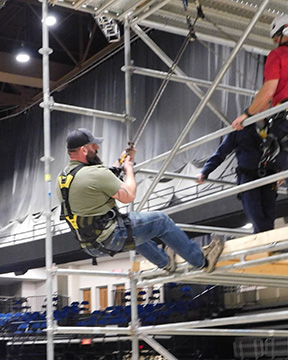
With the proliferation of Rope Access companies working in industrial settings, it’s incumbent upon us to understand what they do. This intermediate to advanced level session will take participants through drills common in the rope access world, including ascending rope and moving laterally using rope to rope transfers with an eye for planning rescue operations should the need arise.
A03 | Fall Protection: Protecting Workers at Heights (Demonstration)
Joe Walch, 3M
11 am – 12 pm, All Levels
This session will focus on the importance of fall protection. It will provide an overview of fall protection standards, hazard recognition, a review of fall arrest systems available, and a live demonstration. Fall protection has topped the list of OSHA’s top ten violations for many years. Protecting workers at heights takes constant training.
A04 | Artificial Intelligence (AI) and EHS: Opportunities and Challenges
Jay Vietas, NSC
11 am – 12 pm, Intermediate, Advanced
Artificial intelligence (AI) is changing how work is performed and will have distinct impact on how EHS professionals prepare to ensure safety and health for the workplace of tomorrow. This session will cover some of the AI tools available to improve safety and health in the workplace, how AI may create or exacerbate hazards to workers, and offer guidance on developing the relationships and risk assessment tools necessary to anticipate and control these hazards in the workplace.
A05 | Overcoming Ourselves: Unlocking Your Leadership Potential
Ryan Bouda/Samantha Bouda, LEAP Training and Coaching
11 am – 12 pm, All Levels
Sometimes the biggest barriers to great leadership aren’t external—they’re internal. Fear, self-doubt, and negative self-talk can limit our ability to lead effectively, especially in high-stakes safety environments. This session uses neuroscience and self-awareness strategies to help leaders recognize and reframe these internal patterns. Participants will learn to shift from judgment to curiosity, manage stress, and lead with confidence and empathy. By overcoming their own mental roadblocks, safety leaders become better equipped to support their teams, influence culture, and elevate performance.
A06 | Trevor’s Story “A Pain that Doesn’t Dull with Time”
Jay Skarphol, NDSC
11 am – 12 pm, All Levels
Jay Skarphol had his post-retirement planned out. But that was before tragedy struck. On Friday, May 25, 2012, Memorial Day Weekend, the Skarphol family was changed forever. Their eldest son, Trevor, who was the lead electrician on the project was killed at a West Fargo construction site. He was 35 days short of his 31st birthday.
A07 | Turn Your Supervisors into Superstars! The Essential Skills They Need to Achieve Success
Chris Ross, SafeStart
11 am – 12 pm, Intermediate
The best workers are often promoted to supervisors, and that can be a challenge—“We lost our best welder and now we have our worst supervisor.” Organizations need skilled and talented supervisors to achieve desired results in safety, quality, production and performance. Managers, supervisors and safety professionals must align in order to achieve organizational goals. That requires supervisors to have effective skills in communication, employee engagement and hazard assessment, as well as the ability to navigate the social change required to manage their former peers. This session will demonstrate the importance of managing the human factors that affect safety, quality and performance at individual and organizational levels. Attendees will gain practical insight into how supervisors can play a more active role in workplace safety.
A08 | National Threat Assessment Center (NTAC) Overview and Case Study: A Trauma Averted
Ed Oslica, National Threat Assessment Center
11 am – 12 pm, All Levels
An overview of NTAC’s pioneer work in the field of threat assessment and targeted violence prevention. Learn about NTAC’s more than 20 years of research into the thinking and behaviors of individuals who have conducted (or planned to conduct) acts of targeted violence on public officials, public figures, K-12 schools, institutes of higher education, federal government personnel and facilities, and public spaces. This section describes the threat assessment model (identify, assess, manage) used by the U.S. Secret Service, the method for gathering information about a concerning individual, and the behavioral themes that are used to assess the risk posed by individuals to harm themselves and/or others. It also discusses the recommended steps for implementing a behavioral threat assessment program.
A09 | Resilient Workplaces: Sustaining Wellbeing and Psychological Safety
Dr. Geri Wolff, Hope Therapy Center
11 am – 12 pm, All Levels
Building on the foundation of Resilient Pathways: Understanding Trauma and Cultivating Effective Coping, this session shifts the focus from individual awareness to organizational application. Dr. Geri Wolff, DBH, OTR/L, explores how trauma-informed principles can strengthen workplace culture, enhance wellbeing, and create psychologically safe environments where employees and leaders can thrive. Participants will learn to recognize the signs of stress and burnout across teams, understand the key components of a supportive workplace, and apply evidence-based strategies that promote resilience and engagement. Through practical examples and interactive discussion, attendees will leave equipped with a sustainable framework to foster trust, open communication, and collective resilience—empowering their organizations to maintain wellbeing and performance in today’s demanding work environments.
A10 | Introduction to Workers Compensation – Claims 101
Nichole Schlosser, WSI
11 am – 12 pm, Basic
Claims 101 training will cover injury reporting/timeliness, what constitutes a work injury, the roles and players on a Workers’ Compensation Claim, Designated Medical Provider and Claims Management Philosophy.
A11 | Assessment of Oil and Gas Worker Hydrocarbon Exposures During Exploration and Production Activities at Unconventional Oil and Gas Wells
John Snawder
11 am – 12 pm, Intermediate/Advanced
Upstream oil and gas work activities may present chemical exposure hazards inherent to that activity and vary based on well type (dry gas, wet gas and oil), geologic basin and type of operation (drilling, completion, production, midstream) performed. Worker exposures were determined by personal breathing zone and area sampling during the full shift and expressed as time weighted averages. Chemicals sampled included: benzene, toluene, ethylbenzene, and xylenes (BTEX), and total hydrocarbons. Identification of exposure sources and patterns of exposure were evaluated through direct reading instruments including combustible gas detectors, flame-and photo-ionization detectors. Geologic formation, worker activities, and design of the production equipment were all factors that affected exposures. Greater understanding of where, when and how exposures occur can allow for better risk assessments and targeted interventions and controls to improve worker safety and health.
A12 | Tire Safety Everyone Should Know
Craig Stevens, Big Horn Tire
11 am – 12 pm, All Levels
We will explore tire topics that are critical to the mobile population and up and coming drivers. Do you ever see the TPMS, (Tire Pressure Monitoring System) in your car light up when the weather changes? Why does it do that and what you should know about your TPMS when the weather changes. Ø If you are in the market for a couple new tires, maybe that’s all you can afford, do you know what to look for and where you should mount them? There is a science and methodology behind proper tire placement on your vehicle. Ø What have you taught your loved ones when it comes to vehicle safety and how to handle your car/truck when you have a tire failure at highway speeds? Do you know what to do and the right way to avoid becoming a statistic?
A13 | Difficult Times, Difficult Conversations
Chris Ross, SafeStart
1:30 pm – 2:30 pm, Intermediate
Even in the best of times having difficult conversations and managing conflict can be tough. Confronting an employee who doesn’t follow the rules, talking to a colleague who bad-mouths you, addressing poor performance—these are tense interactions. And when there are authority issues (like in situations with pilots and co-pilots, or surgeons and nurses) the stakes can be even higher. Discomfort around unpleasant interactions leads to ineffective strategies, like delaying the conversation, rushing to judgement, putting others on the defensive and skirting the real issue. But it doesn’t have to be that way. Having difficult conversations is a skill that can be learned and practiced. Attend this session to discover how resolving problems through skilled communication can build relationships, enhance creativity, boost engagement, develop organizational learning loops and increase performance.
A14 | Measuring System Maturity – The Core Elements of Safety and Health Performance
Wyatt Bradbury, Avetta, University of Alabama, Birmingham
1:30 pm – 2:30 pm, All Levels
What is the benchmark for organizational maturity in safety and health – an ISO 45001 Certificate on the wall? A reduction in injuries? The continuance of “0”? This presentation will review the research behind the Safety Maturity Index and how it seeks to help organizations assess how they are growing and improving in safety and health against internationally recognized consensus benchmarks.
A15 | Building Psychological Safety in the Workplace
Robin Landwehr, Spectra Health
1:30 pm – 2:30 pm, Basic
Attendees will learn why psychological safety may increase the general safety of all employees. By exploring how to improve psychological safety at every level, from individual employees to the organization as a whole, participants can start developing new ideas for psychological safety in their workplace.
A16 | Communication: How do we Move Others to Action?
Kevin Miiller, ITCB Consulting
1:30 pm – 2:30 pm, All Levels
We usually communicate in a way that feels natural to us. We send out information focused on our own goals, without thinking much about how others will understand or react to it. When communication becomes a “check-in-the-box” task, and we don’t consider how others perceive that information, it often leads to lack of buy-in. To get people to take action and support the effort, we must move them through the phases of buy-in. We must understand the different motivational centers and achieve the correct mix for each person. Once we do that, we move our message to a higher priority, which unlocks engagement and action. This approach is not a one-size-fits-all. To make the biggest impact, we must understand different types of people and adjust our communication plan to maximize the impact on a person or for each audience.
A17 | Hazard Awareness and Recognition for Managers and Supervisors
Andrea Jensen, NDSC
1:30 pm – 2:30 pm, All Levels
Are you a supervisor, foreperson or manager and want to gain more knowledge on hazard awareness within your company? In this course you will learn about hazard awareness recognition, SIF and HOP, using the hierarchy of controls to address the hazard, and how to talk to your people about the controls and hazards in the workplace.
A18 | From Hard Hat to Smart Chat: Practical Ways to Use ChatGPT in Safety
Scott Gaddis, Intelex Technologies
1:30 pm – 2:30 pm, Intermediate
Frontline safety professionals balance countless tasks like writing reports, conducting inspections, leading toolbox talks, and staying on top of documentation and training. What if artificial intelligence could take some of that weight off your shoulders? In this session, we’ll explore how ChatGPT can act as a virtual safety assistant by helping the practitioner write faster, communicate better, and save valuable time for what really matters: engaging with their people. You’ll see practical examples of how AI can support everyday safety work, from crafting clear incident summaries to generating toolbox talks or improving employee communication. We’ll also cover best practices for responsible use, how to guide ChatGPT effectively, check for accuracy, and make it work safely within your organization’s systems. Whether you’re curious or cautious about AI, you’ll leave ready to start using it to work smarter, not harder.
A19 | Combating the Four Horsemen of Arc Flash Injuries and Achieving Safety Excellence in Arc-Rated Clothing Programs
Derek Sang, Bulwark
1:30 pm – 2:30 pm, Intermediate
Despite decades of advancements in safety standards and PPE technology, electrical workers continue to suffer life-altering arc flash injuries. Why? This session explores the root causes behind these preventable incidents – ”Irresponsibility, Defiance, Neglect, and Complacency – ”dubbed the Four Horsemen of Arc Flash injuries. It goes beyond basic compliance, challenging safety professionals to assess whether their arc-rated clothing programs are truly keeping workers safe or merely checking regulatory boxes. Drawing on over 20 years of field experience and best practices, this presentation tackles the complexities of arc-rated (AR) and flame-resistant (FR) clothing programs, emphasizing proper selection, use, care, and maintenance. Attendees will explore daily wear vs. task-based PPE strategies, bust industry myths, and learn how to shift from a compliance-driven mindset to a safety-driven culture. Real-world case studies, video demonstrations, and a review of current OSHA guidance will ground the session in practical takeaways that can be implemented immediately.
A20 | Applying Military Decision-Making to Workplace Safety: A Structured Approach to Incident Response
Dustin Workman, Sysco
1:30 pm – 2:30 pm, All Levels
Safety incidents demand clear, timely decisions. This session introduces the Military Decision-Making Process (MDMP) as a structured framework for analyzing incidents and implementing corrective actions. Attendees will learn how to adapt MDMP steps—Mission Analysis, Course of Action Development, Analysis, Decision, and Execution—to improve safety outcomes. Through real-world examples and interactive exercises, participants will gain practical tools for systematic thinking and leadership in safety management.
A21 | Cranes in the Oil and Gas Industry
Travis Black, ProLift Rigging
1:30 pm – 2:30 pm, Basic/Intermediate
In this breakout training session, Travis Black, Director of Technical Services at ProLift Rigging, will guide attendees through three critical components of crane operations often misunderstood or overlooked on modern jobsites: Crane Usage – Are cranes being used as intended by the manufacturer? Travis will dissect how deviations from the manufacturer’s intended use lead to increased risk, mechanical failures, and liability exposure. The discussion will highlight real-world case examples where improper configuration, ground conditions, or lift planning led to incidents—and how adherence to manufacturer guidelines protects both people and equipment. Crane Operators – What defines a “Certified Crane Operator”? This segment will clarify certification standards (NCCCO and equivalent), competency requirements, and the distinction between being “certified” versus being “qualified.” Travis will emphasize the importance of continual skill verification, scenario-based evaluations, and the employer’s role in ensuring operators are competent for the specific equipment and task. Site Owner Responsibilities – Do you know what you’re responsible for? Many project owners underestimate their legal and safety obligations. This section will outline the owner’s duty to provide safe working conditions, verify contractor qualifications, and understand their shared liability under OSHA 1926 Subpart CC. Attendees will leave with a clear understanding of how to structure oversight and documentation to mitigate risk. This session combines real-world field experience, regulatory insight, and manufacturer-aligned best practices to equip attendees with actionable strategies that enhance safety, compliance, and operational integrity.
A22 | MSHA Part 46 Workshop
Tim Hall, Jayme Baumberger, Collin Rogers
1:30 pm – 5:00 pm, All Levels
Did you know that all sand and gravel operations are required to have an MSHA number? Did you know that all mine operators are required to be compliant with the Final Rule on Respirable Crystalline Silica by April 8, 2026? Do you know what your respirable silica level is in your operation? Do you understand the ASTM F3387-19 Standard for respiratory protection requirements? Learn these critical components of the new federal mandate and more. Learn about training requirements and recordkeeping, as well as a refresher on what you need to know about Part 50: Notification, Investigation, Reports and Records of Accidents, Injuries, Illnesses, Employment, and Coal Production in Mining. This interactive workshop is led by three experienced miners and safety professionals.
A23 | The Trust Prescription: The Secret Formula for Exceptional Teams
Ryan Bouda/Samantha Bouda, LEAP Training and Coaching
3:30 pm – 5:00 pm, All Levels
Trust is the foundation of every strong safety culture, but it doesn’t happen by chance. It’s a choice leaders make and a discipline that teams build daily. In this session, participants will explore the five key elements of trust that drive high-performing, safety-focused teams. Through engaging discussion and real-world examples, attendees will learn how transparency, listening, and a shared vision create environments where people look out for each other and speak up before incidents occur. Walk away with actionable tools to strengthen trust, deepen relationships, and build teams that operate with integrity, commitment, and care.
A24 | A Proven Injury-Free Safety Culture Development System
Chris Rockwell, Workplace Learning System
3:30 pm – 5:00 pm, All Levels
Discover how diverse organizations from King’s Hawaiian to Valvoline to Miller Electric Tool Company to Mazda Toyota are eliminating injuries through a unique workplace safety culture development system. This session will explore the basic building blocks of the positive workplace safety culture approach to eliminating all injuries, which can be applied to any manufacturing environment. We will address the key aspects of an effective safety culture, including: Safety as a Core Value, Safety360 Leadership, SafetyFirst Individual Habits and Behaviors, Safety Action Teams, Care Management and Cultural Development. You will learn how to apply two safety system tools (the SafetyMyVoice and the Safety360) to develop effective communication and employee support at your organization – key issues facing any manufacturing leader who wants to eliminate workplace injuries. Injury freedom is achievable! We can show you how.
A25 | Grief in the Workplace
Robin Landwehr, Spectra Health
3:30 pm – 5:00 pm, Basic
Attendees will learn the cost of grief in the workplace, both in terms of the toll it takes on employees and the incredible financial loss. By exploring ways to address grief, companies can provide resources beyond EAPs to help employees through the difficulty of loss and grief.
A26 | Get Home Safe Panel
Art Thompson, WSI
3:30 pm – 5:00 pm, All Levels
The Get Home Safe Panel Discussion brings together industry leaders to explore how we can ensure every worker in North Dakota returns home safely at the end of each day. This engaging session will feature expert insights, real-world success stories, and innovative strategies to address today’s workplace safety challenges. Panelists will discuss fostering a safety-first culture, overcoming barriers to safety, and leveraging technology to prevent injuries. Attendees will leave with actionable ideas to strengthen workplace safety and contribute to a healthier, more secure workforce.
A27 | The Challenge of Change: How to Gain Buy-in for Individual and Organizational Change
Chris Ross, SafeStart
3:30 pm – 5:00 pm, Intermediate
Organizations today are undertaking major change initiatives more frequently than ever before. And one of the primary roles of a Safety Professional is to create change. Agile change execution is vital to the success of these initiatives, yet less than ten percent these change initiatives succeed. Faced with this massive amount of change failure, organizations and professionals are under increasing pressure to make sure future changes are not only successful, but that they are also implemented quickly. This session presents a comprehensive change model that can be immediately applied to your current situations. Participants will explore how to apply the model that includes planning, engagement, implementation, training, and deployment. This process can help you manage change in individuals and the organization – this is NOT PSM! At the heart of it, many safety professionals need to understand, encourage and enable change. So much of safety is really about influence and change – trying to get leaders to change, trying to get employees to change their behaviors, helping the organization to change its culture. Therefore the more tools and techniques that are available to the safety professional, the greater the chances of success in enabling change. And make no mistake about it – even under the best of circumstances change can be very difficult and challenging.
A28 | OSHA Insights: Navigating the Latest Regulatory Landscape
Scott Overson, OSHA
3:30 pm – 5:00 pm, All Levels
Join us for an engaging and informative session that goes beyond the surface. Our “OSHA Insights” presentation offers an in-depth look at the latest rulemaking activities, providing a comprehensive understanding of how these developments impact businesses and industries. In this dynamic update, you will: • Dive deep into the regulatory changes that are currently being developed. • Explore compliance strategies and best practices to proactively address evolving workplace safety requirements. • Engage in discussions and Q&A sessions to clarify any doubts and ensure you leave with a roadmap for navigating the regulatory landscape. Stay ahead of the curve and equip yourself with the knowledge and strategies needed to thrive in the world of OSHA regulations. Don’t miss this opportunity to gain a competitive edge and ensure your organization is well-prepared for the future.
A29 | Process Safety Applications in Oil and Gas Operations
Robert Nocco, Chevron
3:30 pm – 5:00 pm, Intermediate
This session will provide an overview of the Process Safety Elements, including OSHA and EPA requirements. It will cover a practical overview of process safety management aspects in oil and gas operations. Using examples, participants will understand how fits into PSM fits other worksite safety and EHS programs.
A30 | Navigating the Proposed UAS Part 108 Beyond Visual Line of Sight regulations
Paul Snyder / James Moe, UND
3:30 pm – 5:00 pm, Intermediate
Discover how the FAA’s proposed Part 108 Beyond Visual Line of Sight (BVLOS) regulations will transform drone operations for safety teams and companies. This session breaks down the new risk-based framework, key compliance requirements, and technical standards. Learn how these rules enable faster inspections, emergency response, and safer operations while reducing reliance on waivers. Equip your organization to stay ahead of regulatory changes and leverage BVLOS for efficiency and resilience.
A31 | Hazards Hierarchy – What you need to know!
Kurt Rhea, Radiation Pros
3:30 pm – 5:00 pm, Intermediate
Risk is part of life. But where do the greatest risks come from at work and what can we do to avoid injury? The potential risks are all around us! We face danger in rig work, hazardous wastes, dangerous chemicals, toxic substances, inhalation risks, slips, trips, and falls, cell phone usage, and heavy equipment movement, just to name a few! Understanding the hierarchy of risks can help you be better prepared to get home safe every night.
Let everyone know you’re attending Conference!
Download these graphics to use on your emails or social media.
Make the Most of Your Conference Attendance!
Our Attendee Promotional Kit includes everything you need to highlight your involvement in this year’s Safety & Health Conference and encourage others to join you.
DISCOUNTS
Pre-Conference Member Discount
NDSC Members receive discounts on Pre-Conference courses. Just enter Member26 in the discount code box and hit apply code at the beginning of your registration. This discount only applies to Pre-Conference courses.
Other Discounts
Early bird discount will automatically populate in your registration if you register before January 30, 2026. NDSC Member discount and the WSI Policyholder discount will be asked towards the end of your registration. The discounts will only be applied after you answer yes to those questions.
Save almost $1,000 with a group discount for your company!
When you register 10 paid attendees, you’ll receive the 11th attendee completely FREE (equal or lesser value). This doesn’t include Pre-Conference courses. Just email ndsafetyconference@ndsc.org to register your group.
Ready to Register?
When registering to attend the Conference, choose In-person or Virtual. Then you will have the option to add any available Pre-Conference classes to your registration.